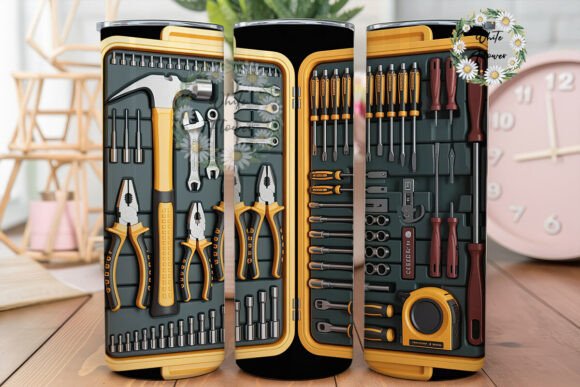
Industrial Tool Kit 20oz Tumbler Wrap Review
As a designer who spends more time at the hoop than away from it, I approach every new machine embroidery design with a mix of curiosity and skepticism. We have all seen those digital files that look stunning on a screen but turn into a thread-breaking nightmare once the needle hits the fabric. Today, I am taking a close look at the Industrial Tool Kit 20oz Tumbler Wrap. While the product listing categorizes this under Tumbler Wraps and Graphics, my job is to evaluate how this asset translates from a high-resolution image into a tangible, stitched reality for real-world projects.
The first thing that strikes me about the Industrial Tool Kit 20oz Tumbler Wrap is its visual personality. It exudes a rugged, utilitarian charm that feels right at home in a workshop or a construction site. The layout suggests a theme of durability and craftsmanship, which aligns perfectly with the ethos of handmade goods. When I visualize this not just as a sublimation wrap but as a potential embroidery project, I see immediate potential for custom apparel and branded merchandise. The mood is serious yet inviting, making it an excellent candidate for clients who want their gear to look professional and tough.
Translating Graphics into Stitched Reality
The product description notes that you will need to size the design to 9.3" x 8.2" using your own image editing software, and it comes in both straight and tapered files. This flexibility is crucial. For an embroiderer, this means we are likely looking at adapting a graphic intended for printing into a format suitable for stitching. If you plan to use this as a base for an applique design or a dense fill stitch patch, the 300 DPI resolution ensures that your digitizing software can trace clean lines without pixelation.
I recently worked on a project for a local boutique that specializes in gifts for tradespeople. They wanted a line of heavy-duty tote bags and aprons. The Industrial Tool Kit 20oz Tumbler Wrap served as the perfect inspiration and base asset. By converting the graphic elements into satin stitches for outlines and fill stitches for the solid areas, we created a textured look that elevated the handmade product far beyond a simple print. The distinction between the straight and tapered files allows for precise placement, whether you are working on a flat surface like a pillow cover or curving around a cap.
Ideal Applications for Custom Apparel and Gifts
This design shines when applied to items that need to withstand wear and tear. Think sweatshirt embroidery for a work crew or a personalized gift for a father who loves DIY projects. The industrial theme resonates well on darker fabrics, where high-contrast thread colors can make the details pop. I could easily see this adapted into an embroidered patch sewn onto a denim jacket or a canvas tote bag design. For holiday embroidery themes, perhaps for Father's Day or Christmas, this offers a refreshing alternative to the usual festive motifs, appealing to a demographic that often gets overlooked in the crafting world.
For Etsy sellers and small shop product creators, versatility is key. This asset can be the cornerstone of a cohesive collection. Imagine offering a matching set: a tumbler with the printed wrap and a hoodie with the embroidered version of the same art. This kind of brand consistency builds customer trust and increases the perceived value of your finished product. It transforms a simple transaction into a curated experience for the buyer.
Technical Considerations and Fabric Choices
However, moving from a graphic file to a stitched design requires careful planning. The Industrial Tool Kit 20oz Tumbler Wrap features detailed elements that demand attention to stitch density. If you are digitizing this yourself or sending it out, be wary of creating areas that are too dense, especially if you intend to stitch this on stretchy fabrics or thin materials. Heavy stitching can cause puckering, ruining the crisp lines of the industrial aesthetic.
When working with textured fabrics like terrycloth towels or fleece sweatshirts, the interaction between the thread and the fabric texture becomes critical. A running stitch might get lost in the pile, so a tighter satin stitch or a well-placed applique layer might be necessary to maintain clarity. Additionally, because the design is not seamless, you must be mindful of your hoop size. Ensuring the 9.3" width fits within your machine's maximum hoop capacity is essential before you even thread the needle.
Dark fabrics present another challenge. While the design looks great on black or navy, you must select thread colors that offer sufficient contrast. A muted grey thread on a charcoal shirt will render the intricate tool details invisible. Always test your color palette on scrap fabric first. Furthermore, if you are applying this to curved surfaces like caps, the tapered file option is invaluable, but you must still account for the distortion that occurs during stitching on a 3D structure.
Enhancing Brand Value and Professionalism
In the world of commercial embroidery, presentation is everything. Using a high-quality source file like the Industrial Tool Kit 20oz Tumbler Wrap ensures that your final output looks professional. Sloppy edges or blurry details can undermine the reputation of a craft business. By starting with a 300 DPI, watermark-free file, you give yourself the best foundation for creating sharp, clean stitches that reflect well on your brand.
This level of quality also impacts buyer engagement. Customers are drawn to products that look durable and well-made. Whether it is a personalized gift for a newborn (using softer threads and simpler adaptations) or a rugged uniform for a mechanic, the underlying design quality dictates the success of the item. It signals to the customer that thought and care went into the creation process.
Practical Notes for the Working Designer
Before committing to a full production run, I always recommend a few practical steps. First, create a black and white mockup of the design to check for value contrast. This helps identify areas where details might merge together when stitched. Second, verify the licensing terms. While the file is free of watermarks, confirming that it is approved for design assets used in commercial sales is vital for protecting your business.
- Test on Scraps: Always stitch a sample on the exact fabric you plan to use for the final order.
- Stabilizer Selection: Choose a stabilizer that matches the weight of your fabric; cut-away is often best for garments that will be washed frequently.
- Check Small Details: Inspect tiny lettering or fine lines in the tool graphics to ensure they won't collapse under the thread tension.
- Wash Testing: Run your sample through a wash cycle to ensure the design holds up without fraying or distorting.
The Industrial Tool Kit 20oz Tumbler Wrap is more than just a digital graphic; it is a versatile springboard for creative entrepreneurship. With the right technical approach and an eye for detail, it can be transformed into stunning custom apparel, memorable baby embroidery keepsakes, or high-end boutique merchandise. It reminds us that good design is not just about how it looks on the screen, but how it performs under the needle.