Peacock Tumbler Wrap 20oz Skinny: A Designer's Review
As a designer who spends more time staring at stitch maps than most people spend looking at their phones, I approach every new digital embroidery file with a mix of excitement and skepticism. We have all been there: you buy a stunning graphic online, load it into your software, and realize the density is a nightmare or the details are too fine for anything but a poster. That is why I took a close look at the Peacock Tumbler Wrap 20oz Skinny. While this asset is technically categorized under Tumbler Wraps and marketed as a high-resolution graphic for sublimation or printing, my brain immediately started translating those pixels into threads. Could this bold, vibrant motif work as a machine embroidery design for a custom project? Let's break down the visual personality and practical application of this piece from the perspective of someone who needs to make it work on fabric, not just on a screen.
First Impressions: Mood and Visual Weight
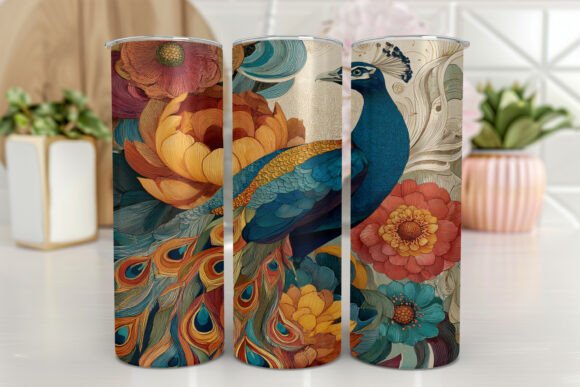
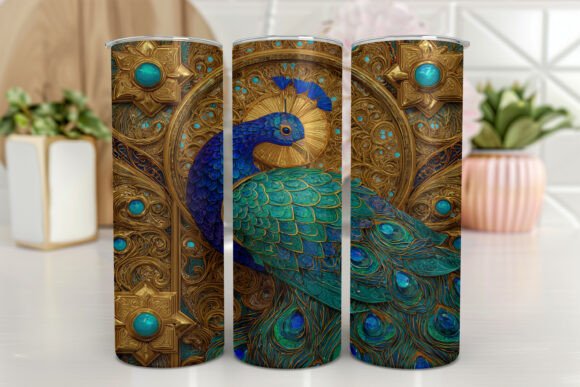
The first thing that strikes me about the Peacock Tumbler Wrap 20oz Skinny is its commanding presence. The layout is designed to fit a specific curvature—9.3 inches by 8.2 inches—which creates a tall, narrow canvas. In the world of Graphics, this allows for a sweeping vertical composition. For an embroiderer, this translates to a design with significant vertical movement. The peacock theme naturally evokes elegance, luxury, and a touch of bohemian flair. It is not a shy design; it demands attention.
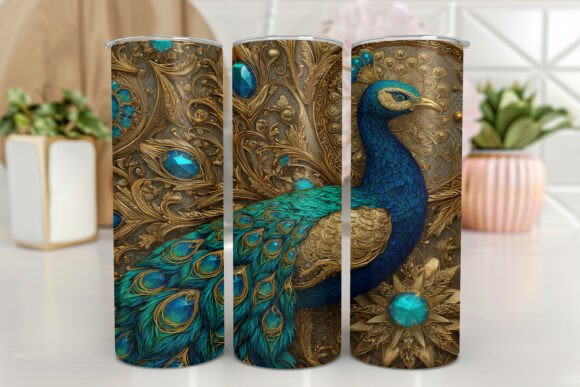
If I were to translate this image into stitches, the "mood" would be rich and textured. Peacocks are defined by their iridescent feathers and intricate eye patterns. In embroidery terms, this suggests a heavy reliance on satin stitch for the outlines and long, flowing fill stitch areas to capture the gradient of the plumage. The visual personality here is definitely boutique-ready. It feels like something you would see in a high-end gift shop rather than a discount bin. For an Etsy seller or small shop product creator, this kind of aesthetic adds immediate perceived value to a handmade product.
Real-World Application: Beyond the Tumbler
Now, let's get practical. The product description notes this is for a 20oz skinny tumbler, but as a maker, I rarely stick to just one substrate. I immediately imagined how this design would perform if adapted for a custom apparel line. Picture a structured denim jacket or a heavy-weight canvas tote bag design. The vertical orientation of the peacock would look spectacular running down the side seam of a jacket or centered on a large tote.
I recently worked on a project for a client who wanted unique holiday embroidery gifts for her bridal party. She needed something that felt personal but not overly cheesy. If I were to use the motifs found in the Peacock Tumbler Wrap 20oz Skinny for this, I would likely scale it down for a pocket placement on a sweatshirt or create a large back-piece for a team jersey. The level of detail in the original graphic suggests that, when converted to an embroidery file, it would shine on larger items like pillow covers or wall hangings where the needle has room to breathe.
For those running a craft business, versatility is key. This design could easily become the centerpiece of a personalized gift collection. Imagine an embroidered apron for a hostess or a decorative throw pillow for a nursery. The organic shapes of the feathers translate well to applique design techniques, where you could layer different fabrics to mimic the color shifts of a real peacock without relying solely on thread color changes. This approach reduces stitch density issues and adds a lovely tactile dimension to the finished product.
Technical Considerations and Fabric Challenges
Here is where we need to be honest about the limitations. Taking a high-resolution graphic intended for print and turning it into a commercial embroidery asset requires careful engineering. The original files are 300 DPI images packaged in a .zip archive. They are not native embroidery formats like PES or DST. This means you cannot simply load this into your machine. You must digitize it first or hire a professional to do so.
If you decide to digitize the Peacock Tumbler Wrap 20oz Skinny yourself, pay close attention to stitch density. Peacock feathers are detailed. If you try to cram too many running stitch details or dense fills into a small area, you will end up with bird nesting and broken needles. This design is best suited for medium-to-heavy weight fabrics. Trying to stitch this on a thin, stretchy t-shirt without proper stabilization would be a disaster. The fabric would pucker, and the intricate details of the peacock's eyes would get lost in the distortion.
You also need to consider the hoop size. Given the dimensions (9.3" x 8.2"), this is a large design. You will need a large hoop, likely 5x7 or larger, depending on how much you scale it. If you are working on curved surfaces like caps, this specific layout might be too tall. Caps require shorter, wider designs to fit the front panel correctly. However, for flat items like tea towels, blankets, or patch creation, the dimensions are manageable.
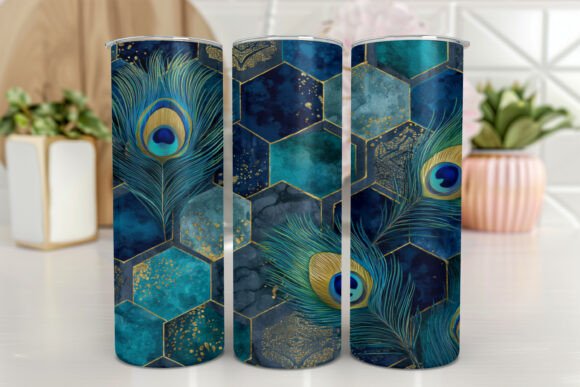
Another critical factor is thread colors. Peacocks rely on blues, greens, teals, and golds. When converting from a digital graphic to thread, ensure you have high-quality rayon or polyester threads that can mimic that sheen. Cheap threads will make the design look flat and muddy. Also, test your design on both light and dark backgrounds. A peacock design often has dark outlines; if you stitch this on black fabric, you might lose the definition unless you incorporate a backing or use lighter thread accents to create contrast.
Maximizing Value and Professionalism
Using a distinctive motif like this can significantly boost your brand consistency. If you are an apparel decorator, offering a "Peacock Collection" gives your shop a cohesive look. Customers recognize style. When they see a well-executed, complex design like this on a sweatshirt embroidery piece or a baby embroidery blanket (scaled appropriately), they associate that quality with your brand. It builds trust.
However, remember the licensing. The product note states: "This listing is for digital files only." It does not explicitly grant commercial embroidery rights for the digitized version of the image. Before selling design assets or finished goods based on this graphic, you must confirm the license terms with the creator. Many graphic designers allow personal use but require an extended license for commercial manufacturing. Ignoring this can lead to serious legal trouble for your small business.
Final Verdict and Designer Notes
The Peacock Tumbler Wrap 20oz Skinny is a visually stunning graphic with immense potential for creative adaptation. It is not a plug-and-play embroidery file, but rather a high-quality source image for a custom embroidery project. Its strength lies in its bold vertical composition and rich thematic elements.
Before you commit to stitching, follow these practical steps:
- Digitize with care: Do not auto-digitize complex feather details. Manually set your stitch angles to follow the flow of the plumage.
- Test on scraps: Always run a test stitch-out on the actual fabric you plan to use. Check for puckering and registration issues.
- Stabilizer is key: Use a cut-away stabilizer for stretchy fabrics and tear-away for stable wovens. For dense areas, consider a water-soluble topper to prevent the needle from sinking into the pile.
- Check contrast: View your digitized preview in black and white to ensure the shapes are distinct without relying on color.
- Verify rights: Confirm you have the right to sell finished physical goods made from this graphic.
In conclusion, while this product is sold as a wrap for tumblers, its true value for an embroiderer lies in its adaptability. With the right technical approach, the Peacock Tumbler Wrap 20oz Skinny can be transformed into a premium embroidered patch, a statement piece of home decor, or a standout item in your holiday catalog. It rewards the maker who understands that great embroidery is about translation—taking a beautiful image and giving it texture, depth, and life through the needle.