Review: Watercolor Stingray Floral 20oz Tumbler Design
As a designer who spends more time staring at stitch maps than most people care to admit, I approach every new machine embroidery design with a mix of curiosity and skepticism. When I first pulled up the Watercolor Stingray Floral 20oz Tumbler file on my screen, my initial reaction wasn't about the technical specs immediately; it was about the mood. There is a specific tranquility to marine life motifs when paired with soft botanical elements, and this graphic captures that breezy, coastal vibe perfectly. However, translating a high-resolution PNG intended for sublimation or printing into a tangible embroidery project requires a different kind of eye. We aren't just looking at pixels; we are thinking about thread tension, fabric grain, and how a customer will feel when they run their hand over the finished product.
First Impressions and Visual Personality
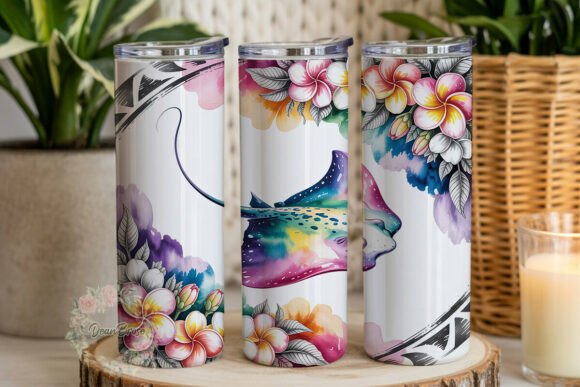
The layout of the Watercolor Stingray Floral 20oz Tumbler suggests a flow that is organic rather than rigid. In the world of Tumbler Wraps and Graphics, watercolor styles are popular because they mimic the softness of paint without hard, digital edges. For an embroiderer, this presents both an opportunity and a challenge. The visual personality here is gentle and inviting, making it an ideal candidate for boutique items where the goal is elegance rather than bold, blocky impact. The dimensions listed at 9.3″ x 8.2″ indicate a substantial coverage area, which tells me this isn't a subtle chest logo; it is a statement piece. When I imagine this stitched out, I see long, sweeping fill stitch areas for the stingray's body, potentially broken up by delicate running stitch outlines to define the floral accents. The key to making this work in thread will be managing the transition between the "wet" look of the watercolor and the texture of the thread.
Real-World Application: The Coastal Boutique Scenario
Let's move away from the screen and into a real-life scenario. Imagine you are preparing a collection for a small beachside shop or an Etsy store specializing in personalized gifts. You have a batch of high-quality canvas tote bags and heavy-weight linen aprons ready for production. This is where the Watercolor Stingray Floral 20oz Tumbler design could truly shine if adapted correctly. While the original files are formatted as PNGs for straight and tapered tumblers, the artistic composition translates beautifully to flat surfaces.
If I were using this for a tote bag design, I would focus on the central stingray motif. The floral elements surrounding the marine creature add a layer of sophistication that elevates the item from a simple grocery bag to a fashionable accessory. For a sweatshirt embroidery project, perhaps for a family beach reunion, the soft color palette implied by the watercolor style would look stunning against heather grey or sand-colored fleece. The goal is to create a handmade product that feels cohesive. Customers today are savvy; they can tell when a design looks like a generic clip-art dump versus a thoughtfully curated asset. Using this graphic as a base for a custom appliqué or a detailed satin stitch rendition builds trust and enhances your brand's perceived value.
Navigating Technical Challenges in Stitching
Here is the practical reality check: this design was originally conceived for print application on curved tumbler surfaces. Bringing it into the realm of commercial embroidery means we have to do some heavy lifting regarding digitization or adaptation. Since the purchase includes PNG files at 300 DPI, you are working with a raster image, not a pre-digitized embroidery file. This is a crucial distinction. You cannot simply load this into your machine and hit start.
To use this effectively, you must consider stitch density. Watercolor effects rely on blending colors, which in embroidery can lead to excessive thread buildup if not managed. If you are digitizing this yourself or hiring someone to do it, pay close attention to the underlay. On textured fabrics like terrycloth towels or waffle-weave aprons, a dense design can cause puckering. Conversely, on thin, stretchy fabrics like a baby onesie, too much density will make the garment stiff and uncomfortable. I recommend testing the design on scrap fabric that matches your final product exactly. Check how the thread colors contrast against the background. A light blue stingray might disappear on a white towel but pop beautifully on navy.
Furthermore, consider the hoop size. With dimensions over 9 inches, you will likely need a large hoop or a multi-position setup. Ensure your machine can handle the span without distorting the fabric. For curved surfaces like caps, this specific layout might be too wide, so it is better suited for flat panels on hats or the back of jackets. Small details, like the tiny petals in the floral arrangement, need careful scrutiny. In a printed graphic, a one-pixel line is fine; in embroidery, that needs to be a minimum width to hold the thread, or it will vanish entirely.
Enhancing Product Value and Customer Appeal
Why go through the trouble of adapting a PNG for embroidery? Because the tactile quality of thread adds a dimension of luxury that printing cannot match. A personalized gift featuring the Watercolor Stingray Floral 20oz Tumbler motif, executed in glossy rayon or matte cotton threads, becomes a keepsake. It signals effort and craftsmanship. For Etsy sellers and creative entrepreneurs, this differentiation is vital. When a buyer receives an embroidered patch or a custom pillow cover with this design, the texture invites interaction. It feels premium.
This design also offers excellent versatility for seasonal collections. While the marine theme is year-round for coastal residents, the floral elements allow it to bridge into spring and summer holiday promotions. Think of it as a centerpiece for a "Summer Solstice" collection or a thoughtful wedding gift for a couple who loves the ocean. The professional presentation of the finished item reflects directly on your reputation. Consistency in quality—ensuring clean trims, proper stabilizer usage, and crisp stitching—turns a one-time buyer into a repeat customer.
Final Designer Notes and Best Practices
Before committing to a full production run, take these practical steps. First, verify the licensing terms. Just because you purchased the graphic does not automatically grant unlimited commercial rights for all derivatives; always confirm you can sell finished physical goods. Second, create black-and-white mockups of your intended stitch-out. This helps you visualize the contrast and identify areas where details might get lost without the distraction of color. Third, experiment with different stabilizers. A cut-away stabilizer is often safer for designs with significant fill areas to prevent long-term distortion after washing.
Remember, the Watercolor Stingray Floral 20oz Tumbler is a fantastic source of inspiration and a high-quality design asset, but its success in embroidery depends on your execution. Treat it as a blueprint rather than a final map. Whether you are creating baby embroidery for a nursery, decorating kitchen linens, or launching a new line of custom apparel, the potential is there. By respecting the limitations of the medium and leveraging the aesthetic strengths of the artwork, you can create a finished product that stands out in a crowded market. Happy stitching!